Polishing when, why and what for?
Paint imperfections, surface defects, and inconsistent finishing can undermine the quality of even the best paint jobs and often result in costly rework or customer dissatisfaction. Achieving a flawless finish requires controlled correction, precise polishing steps, and reliable products that consistently deliver the desired gloss and clarity under time pressure.
Whether it concerns the correction of small imperfections in freshly sprayed paint, the repair of stone chip damage or removal of scratches, you have access to a complete range of products for car detailing and valeting. From cleaning and protecting to high-gloss polishing; you can rely on professional and time saving systems and tools to make your life easier. This range of polishing products is designed to put the perfect finishing touch on any paint job, enhancing gloss, depth, and clarity. These advanced polishing solutions provide the smoothness and shine needed to create a professional grade appearance.
Polishing Solutions
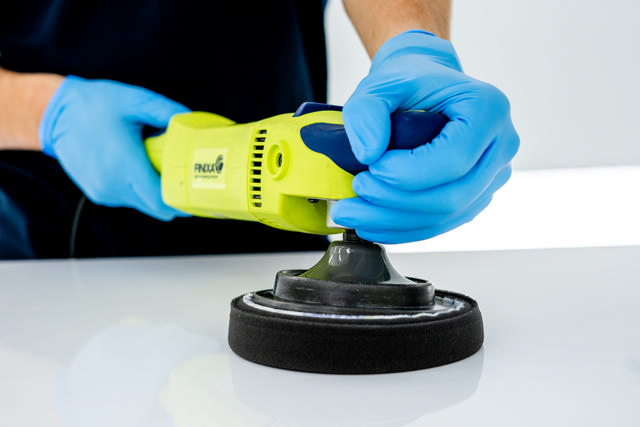
Electric polishing machine
Art.no. POL 55
With a 2:1 transmission providing high torque at low RPM, this polisher is designed for efficiency and optimal results.
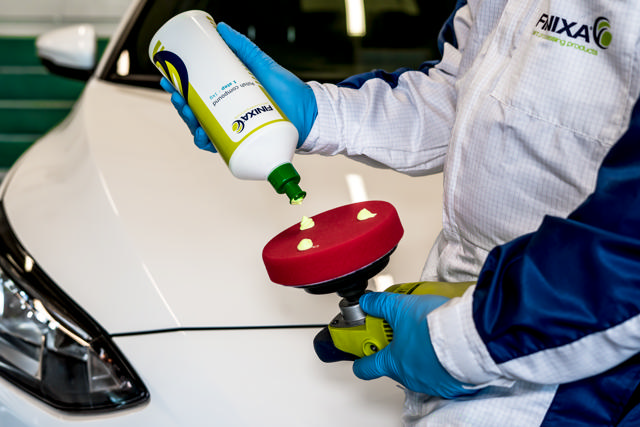
1 step polish paste
Art.no. POL 05-10
1-Step Polish Paste with nanotechnology delivers 95% gloss, saves up to 50% polishing time, and ensures easy cleanup on fresh, weathered, or ceramic paints.
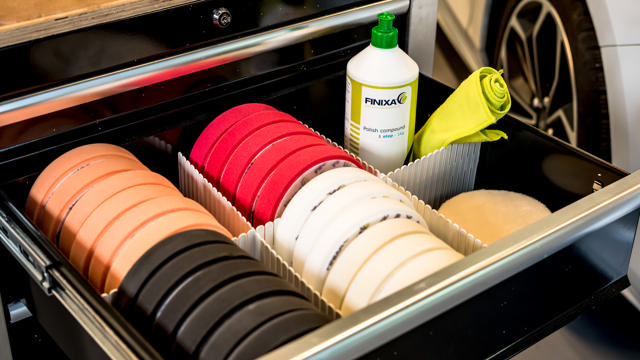
Polishing pads
Art.no. POP
Foam pads designed to cater to your specific polishing requirements.

Let’s get started with the basics... What is polishing?
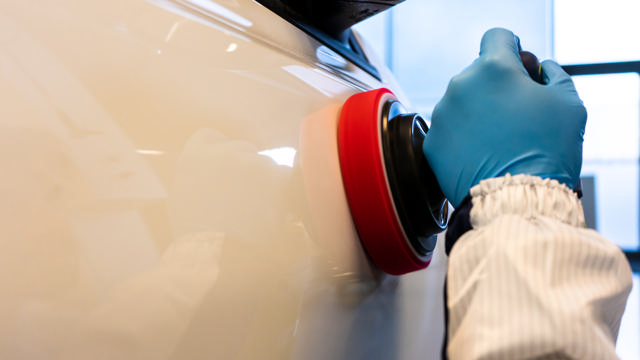
Whether it is the perfect beading of the morning dew or just the idea of looking in a mirror. A good polishing/waxing job can make the difference between an ecstatic (and therefore returning) customer that shows off your work to all of his friends or just to the next guy around the block. Of course, polishing is not only about a shiny, mirrorlike look. Polishing offers several advantages and in many cases up values your car in just a few easy steps.
The principle of fine sanding and polishing is the same. We start with a coarser grain to remove material and uneven edges on the surface and then switch to a finer grain, to make the scratches finer (read: smaller and closer together). This results in a flat and more even surface. By flattening the surface and removing the structure in the topcoat, you reduce the amount of reflection angles, giving the surface a more 'mirror like' look.
We stated before that polishing offers several easy solutions for scratches and paint imperfections. Polishing can even bring your paint back to life. Take a look at the overview of which steps to take to solve which paint imperfections.
Orange peel
Whether it is a new assembled car fresh of the line or an old-timer, orange peel is a well-known issue. During the painting process, the paint is applied with a thickness and consistency that allows the paint to flow and equalise. If the paint is applied from too far of a distance, and does not flow correct, the paint does not level properly, causing an uneven surface called orange peel.
Paint drips
When the paint is applied too thick or not even enough we get sags and runs. These give the paint job an overall unprofessional look and require a bit more work to remove. Using the right file, followed by sanding and polishing, these can be completely removed.
Dust nibs
Let’s be honest. No matter how much you degrease, clean and air blow the surface, you won’t be able to remove every bit of dust. Small particles and other foreign material that land on the paint during the process are inevitable. These create small nibs that can be removed with a file and polish.
Weathered and matt paint
Weathered paint can ruin an otherwise perfect car. Polishing the surface lifts that dull, milky haze away easily and brings the car back to near-new condition. Sanding the top coat and polishing the whole surface on its own can take years off how old the car looks.
Etching in the paint is a common problem, caused by tap water or acids in the rain. Bird droppings are another frequent cause. Depending on how deep the etching goes, polishing will either remove the affected spots completely or reduce them considerably.
Removing scratches
Scratches that do not extend past the first 25% of top coat material can be fully repaired by polishing. An easy way to check this, is just by wetting your finger and rub over it. If the scratch disappears, it can be removed by simply polishing the spot.
Micro-scratches or spider webbings are often caused by automated car washes or sand residue on the sponge while washing. These are small scratches that are mostly visible when the sun hits the paint.
Polishing is a great way to remove those hideous scratches around your door handles caused by fingernails, rings, and keys. The whole process can be done in about 30 minutes and when you’re done, your car won’t look like an animal has been trying to open your doors.